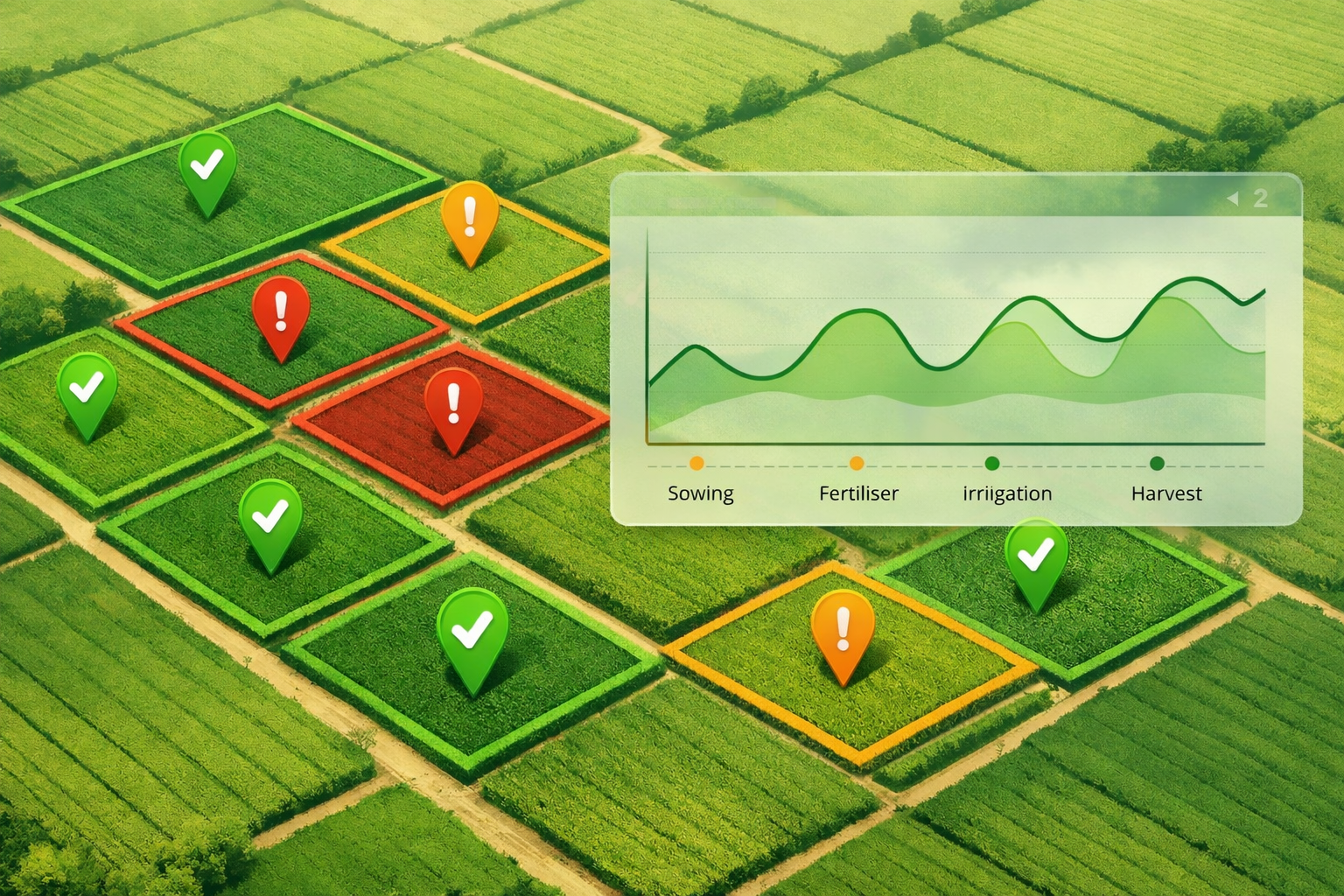

 The problem
Every structured farmer program runs on a produce spec — a nitrogen range in grain, EPA-compliant residue levels, potatoes of a specific dimension, sucrose above a defined threshold in cane.
To hit the spec, the program runs on a cropping protocol: sowing window, variety, fertiliser doses at the right stage, irrigation schedule, spray calendar, harvest timing. If the protocol isn’t followed, the produce doesn’t meet spec. Supply security is already gone — the company just doesn’t know it yet.
Why the traditional way falls short
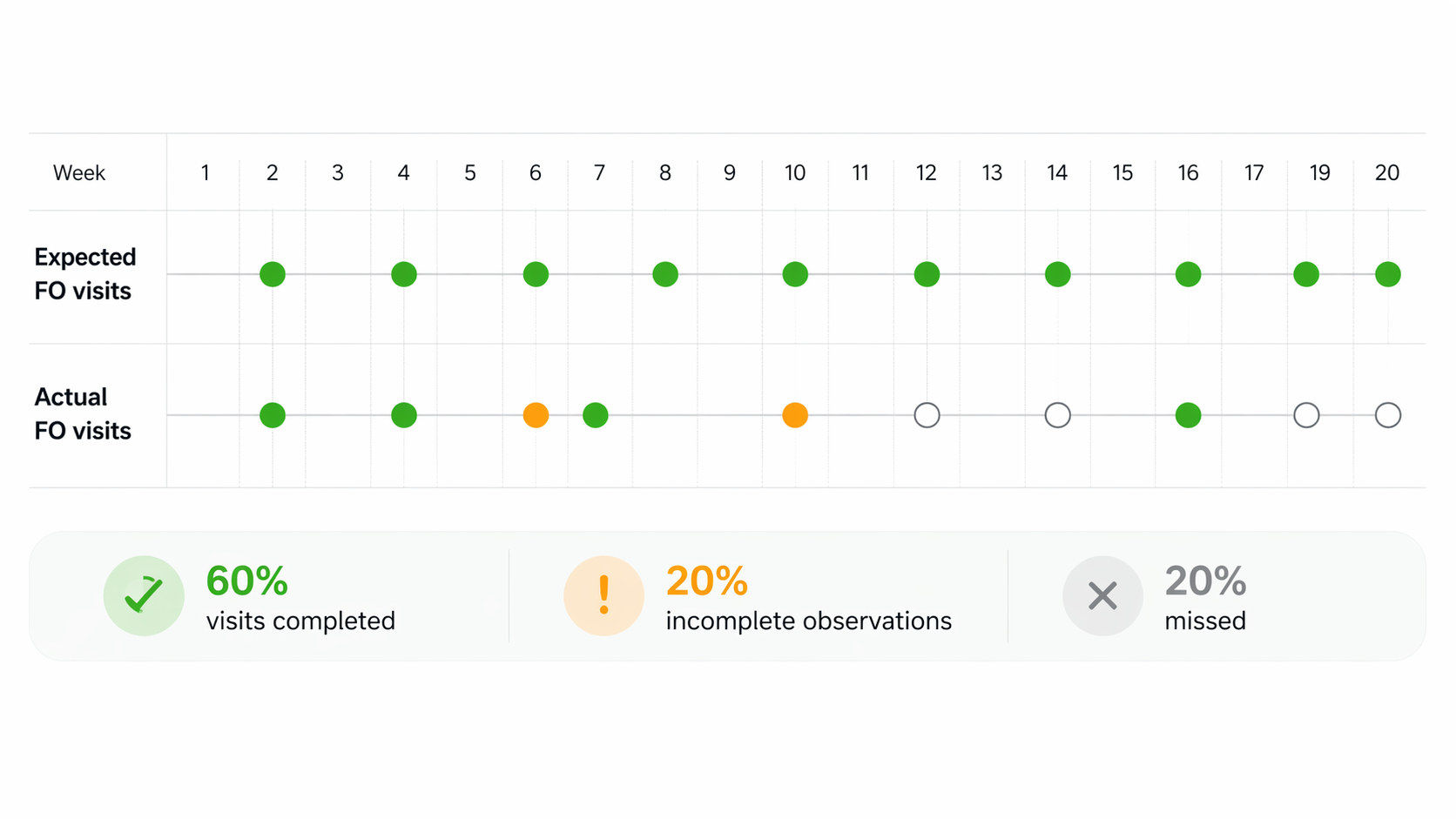
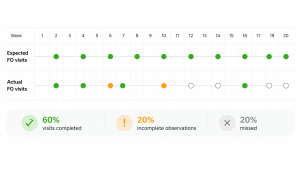
The standard playbook puts field officers (FOs) on plot visits at a defined frequency. On a whiteboard it looks clean. On the ground, three things break it:
- FOs don’t always have the bandwidth. Sometimes the week runs out, sometimes focus slips. An FO covering hundreds of farmers across dozens of villages can’t be everywhere at once.
- They don’t always know when to visit. Sowing dates vary widely across a cluster — some plots go in early, some late. Without a per-plot stage view, FOs miss the narrow windows where a protocol check actually matters.
- Observations are inconsistent. When visits do happen, some deviations get missed, some get recorded wrong, some plots simply get skipped — not because the FO is careless, but because the week ran out.
The net result: program heads are flying blind until harvest. By then, the cycle is over.

How we built Plot 360 — a core part of the Farmer Programme Management OS
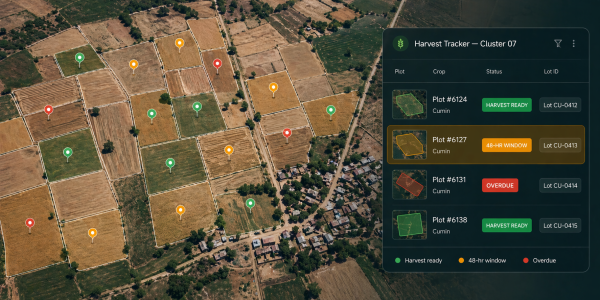
Instead of relying on an FO reaching a plot to detect a problem, we built a system where the plot surfaces the problem itself, and the FO gets routed to the right one at the right time.
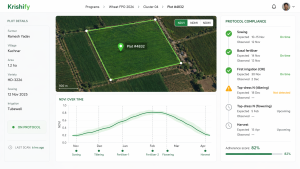
Plot 360 stacks three layers for every geofenced plot in the program:
- Registration data (one-time, manual): boundary, sowing date, variety, irrigation method, farmer details.
- Satellite intelligence (daily): NDVI, NDMI, NDWI and derived indices. ML models trained on program data estimate actual dates of sowing, fertiliser application, nutrition events, spray windows, irrigation, and harvest.
- Protocol overlay: the program’s agronomic protocol loaded as ground truth, compared daily to what the plot is actually showing.

The alert cascade
Every 24 hours, the system scans every plot. When a deviation is detected, the loop closes fast:
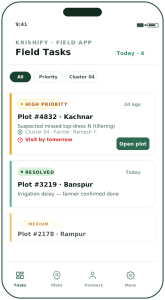
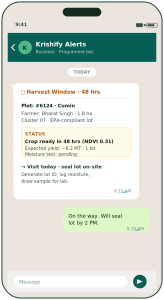
- FO task + WhatsApp alert. A task appears in the FO app with the plot, the deviation, and the recommended action. A WhatsApp nudge fires in parallel.
- Farmer-side advisory. A personalised message in the local language, referencing the plot and crop stage, goes to the farmer via WhatsApp or IVR.
- Escalation to the program head. If the issue isn’t resolved within the SLA, it moves up with the full plot history — so the question shifts from “did the FO visit?” to “what’s the real blocker?”
What changed, measured
On one program we ran this on:
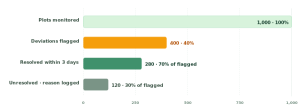
For the remaining 30%, the program head had a documented reason — borewell down, input unavailable, farmer-side blocker — instead of a silent compliance failure.
Two downstream effects showed up fast: program heads started making decisions on data instead of anecdotes, and the procurement team entered harvest with a ranked shortlist of on-spec plots, not a guess.
This is not a satellite monitoring tool
Supply security is often treated as a procurement problem — managed with buffer stock, spot buying, and tighter grading at the gate. That approach works up to a point, but it leaves most of the upside on the table. The real lever sits upstream, in-season.
The satellite layer is one input. The value is in closing the loop.
Supply security is won plot by plot, week by week, in-season. Not at the gate.
Krishify’s Farmer Programme Management OS runs this architecture today across programs spanning grains, horticulture, and sugarcane. If you’re designing or scaling a structured farmer program, let’s talk.